

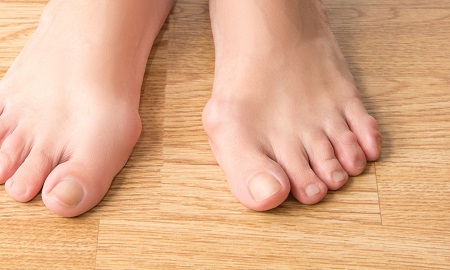
When your big toe pushes against the next toe, forcing the joint of the big toe to expand and protrude, the resultant bony bump is known as a Bunion. The skin over the Bunion is often red and painful. Wearing tight narrow shoes is commonly the cause of bunions, but they can also develop from a medical condition like arthritis, inherited structural defects, or other stresses on the foot.
When the muscle that supports the arch of your foot weakens, through modern life and the wearing of shoes, this can increase the likelihood of Bunions forming.
What are the symptoms of Bunions?
The primary symptom is the bulging bump outside the base of the big toe, but other symptoms are: swelling, redness and pain around the big toe joint; corns and calluses which develop where the first and second toes overlap; intermittent or persistent pain and restricted movement of the big toe.
What are the causes of Bunions?
Bunions result from complex biomechanical changes in the feet and shoes (particularly tight-fitting shoes with high heels and narrow toe boxes) that restrict the feet. Because wearing shoes isn’t exactly natural and they limit foot and toe activity, our feet and in particular, the toes, tend to chronically lack exercise. Just walking barefoot regularly can be beneficial to Bunion sufferers.
The slope of the foot bed of high heel shoes put the feet at a disadvantage and makes them more susceptible to strain. It causes the front of the foot to bear your weight which makes the forefoot widen. A narrow toe box exacerbates the problem by causing the toes to squeeze together and be at an angle, straining the big toe in particular.
Injuries to the foot and poor arch control leading to flat feet or overpronation can also cause Bunions.
What is my best course of action?
Consult your Physiotherapist directly who, after a comprehensive examination, will embark on a treatment program which typically targets:
- Pain relief, minimising swelling and injury protection
- Restoration of normal foot and ankle ROM and muscle length
- Restoration of muscle strength and control through prescription of exercises to correct the foot biomechanics – this starts from day 1 and should be made a priority
- Restoration of full function and prevention of recurrences – Your rehabilitation program will be tailored to achieve your own functional goals. Depending on your needs at this point, you may be fitted with off the shelf inner soles, or referred to a Podiatrist for custom made orthotics.
Bunions can be corrected to the point where you forget they were ever there! And more importantly, they are preventable in the first place – so contact us today to embark on a program that will lead to a pain free and bunion free future!