

Along the length of the spine there are small joints on the left and right of each link between the vertebrae. These are your facet joints – one pair of joint surfaces face up and one faces down. The pair above joins the pair below at each level of the spine.
The function of each pair of facet joints is to guide and limit the movement of each spinal segment. There are 3 sections to the spine and their facet joints are referred to as the cervical or neck, the thoracic or upper back and the lumbar or lower back facet joints. Facet joint pain is one of the most common causes of neck or back pain.
What are the symptoms of Facet joint pain?
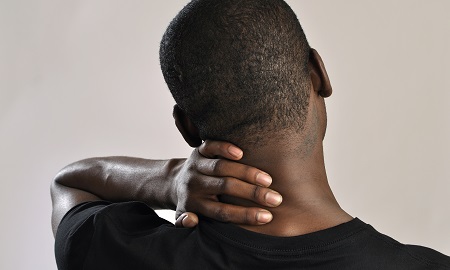
An injury to the neck facet joint will cause pain to the neck or possibly the shoulder and upper arm. A back facet joint injury will cause pain to the back and possibly referred pain around the chest wall or to the buttock or thigh.
A Locked facet joint is when movement away from the pain is severely limited. When a locked facet joint becomes acute, muscle spasm will attempt to protect it. This results in pain, which may initially be felt in a very small area, worsening as the muscles become fatigued. As the body compensates for locked joints by moving neighbouring joints more than they usually would, pain is often experienced on the opposite side of the locked facet joint and may lead to other conditions. Decreased movement and difficulty stretching are also symptoms.
What causes Facet joint pain?
Injury can reduce facet joint motion, known as hypomobility – or movement may become excessive, which is known as hypermobility.
Hypermobility is often (but not always) caused by trauma as with:
- Dislocations
- Fractures
- Generalised excessive flexibility – or what might be referred to as being ‘double jointed’
- Destructive diseases – such as Rheumatoid arthritis
Hypomobility is caused by slow degeneration or poor motion of the facet joints, as with:
- Locked facet joints
- Arthritic facet joints
- Joint capsule thickening, shortening or scarring
- Degenerative bone spurs.
Locked facet joints are caused by twisting, awkward or unexpected movements – like one experiences when stumbling. It’s when facet joint motion exceeds muscle control. It can easily be triggered through a previous injury or weakness of the facet joint supporting muscles. People who repeatedly have locked facet joints typically have weak stability muscles that fail to control spine movement adequately.
What is my best course of action?
The treatment of a locked Facet joint is relatively simple and your Physiotherapist can usually unlock it using a painless mobilisation or manipulation technique. Treatment to regain full mobility and prevent re-occurrence varies according to what your Physiotherapist has ascertained during your individual assessment and despite presenting as a condition of restricted motion, the long-term stability for these joints is typically gained from limiting excessive motion in future by restoring proper control, as will be the case with other Hypermobile conditions.
Stiff or Hypomobile Facet joints are treated very differently to those which are hypermobile. Arthritic joints and those with capsule or ligament scarring respond to repetitive loosening to restore full mobility. This may initially be done manually but for lasting results, a person needs to mobilise these joins actively during their normal activities of daily living and therefore, rehabilitation plays a vital role in resolving spinal pain. Contact us directly for an accurate diagnosis of your specific condition and guidance to get you back on a positive path to being pain free again.