

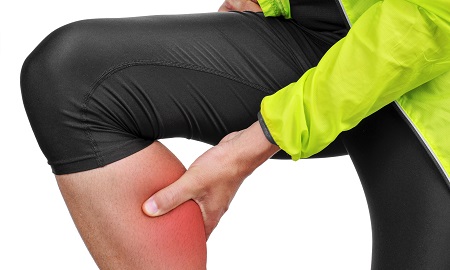
‘Muscle strains’ and ‘Ligament sprains’ and are often confused and usually written about in tandem, and although the rehabilitation principles are similar they are in fact quite different conditions. Ligaments join bone to bone and injuries occur when there is excessive movement forced through a joint, whereas muscle and tendon (joining muscle to bone) strains occur when there is a poor level of fitness or poor dynamic control within the muscles…quite different and so we deal with them in separate articles.
What is a ‘muscle strain or tear?’
Muscle strains are the most common source of muscle pain and are also known as muscle tears in the more severe cases. They vary greatly in severity from mild up to a complete muscle rupture. Muscle sprains that occur in the ankle, calf, thigh and biceps usually happen at high speed when the muscles are overloaded. When occurring in the back, shoulders and neck, it is more commonly as a result of muscle fatigue from postural strains.
What are the symptoms of muscle strain or tear?
Naturally, pain is experienced in the affected area and the pain can vary according to the severity of the tear. One can also experience:
- Weakness of the muscle – an inability to perform normally
- Bruising of the muscle
- The muscle feels tight and strained
- You cannot fully stretch the muscle
What is my best course of action?
If you experience these symptoms and the injury appears to be fairly mild your immediate course of action should be to apply a compression bandage on the affected area. It’s also a good idea to elevate the area if it’s swollen by, for example, raising your leg above your body. If you are still able to perform, then reduce training to a level where pain is no longer experienced.
Should your home treatment be ineffective and the injury continues to niggle, or if you are experiencing severe pain, or are unable to move normally, then it is advisable to immediately contact your Physiotherapist, who is trained to accurately diagnose the exact nature of the injury, advise on and carry out the best treatment for you. If the injury is sports related and waiting/resting is not an option you’d like to consider, you can save time (and often money too) by contacting your Physiotherapist directly to get back into action ASAP.